| |
|
|
| Species: Selinum vaginatum |
|
|
| Profile: |
| Selinum vaginatum is a species native to India. It is valued for its various uses in medicine and local cuisine. The root is valued for its chemical constituents mainly selinidin, vaginidin and angelicin. The roots of the plant are also used as an adulterant for jatamansi. |
Habitat and ecology: A common inhabitant of the meadows, shrubberies and dry areas, this plant is found in the temperate and alpine moist pastures and occurs at an altitudinal range of 2000-4000 m. In the Western Himalayas, the plant is distributed between 1800-3800 m. It is found in temperate and alpine moist pastures in Chhota and Bara Bhangal area of Kangra, Holi range of Chamba, Parvati Valley and Rohtang area in Kullu and Rampur and Rohru division of Shimla district.
|
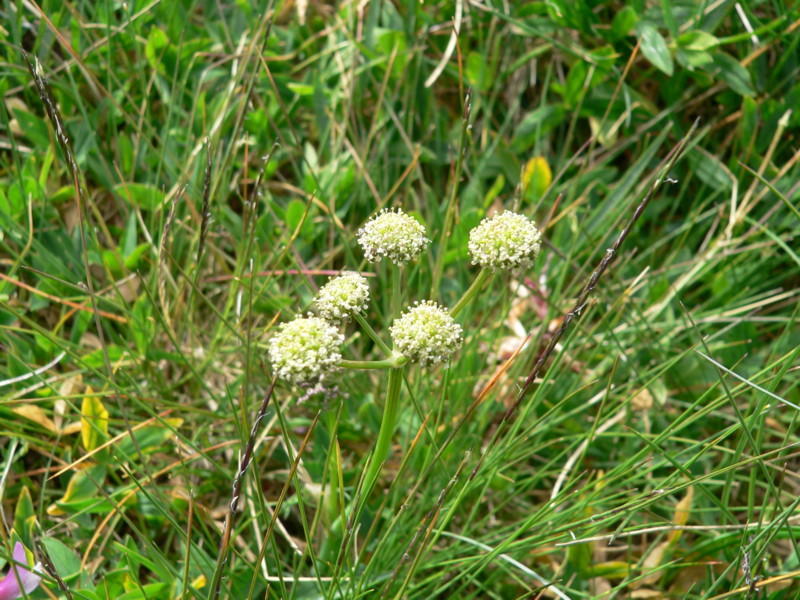
| Morphology: It is an erect, tall, glabrous and hairy perennial herb with biennial tubers that can be easily distinguished by its clusters of small, white flowers on long, thin stems. The lower leaves are broad and long with gradually narrowing and deeply incised upper leaves. The plant grows up to a height of 1.5 m. The stem is hollow and finely grooved with leaf segments lanceolate, serrate, lobed or pinnatifid. The flowers are white, long stalked, with compound umbels. The fruits are glabrous, flattened, ovate-oblong, 4-8 mm long, with winged ridges. |
| Distinguishing features: The herb has a robust, aromatic rootstock beset with thick tufts of grey fibres that are left over by the dying leaves. This plant can be easily distinguished by its clusters of small, white flowers on long, thin stems. |
| Life cycle: The vegetative phase continues till June and the plants start flowering in July. Seed setting starts taking place in the month of August-September. The seeds reach physiological maturity by the end of September-October. |
| Uses: The roots are dried and stored in gunny bags, to be ground into a fine powder later and used in drugs. The roots serve as a nervine tonic and sedative. They are also used in skin diseases. The volatile oil extracted from them possesses antibacterial and analgesic properties and is applied over wounds. The roots of the plant also possess a sweet and musky odour and are employed as incense locally called dhoop. They have their culinary uses as well. Small pieces of roots or a pinch of powdered dried roots are used as a spice to add flavour to local dishes. The rhizome is used for the preparation of liquor and for treating patients with mental disorders. The leaves of the plant are regarded as a nutritious fodder for sheep and goats. |
|
| |
|
|
 |
|
| Family: Apiaceae |
| Common/local name: Selinum, Mathosla, Bhutkeshi, Moor (Kumaon), Pushwari (Kashmir) |
| Trade name: Bhutkeshi |
|
|
|
| File Size:938.5615234375kb |
|
|
|
| |
| |
|
|


