Himalayan VOICES High Himalaya FORUM Himalayan Heritage  
 
Search
 
 
View more Databases:
CULTURAL RESOURCES
Tribes
Socio-economic Fabric
Language & Literature
Art, Crafts & Architecture
 
Species:        Artemisia brevifolia
Profile:

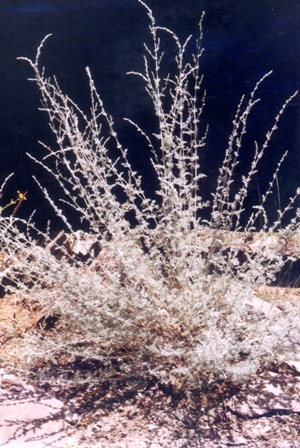
This strongly aromatic, shrubby perennial is one of the dominant species of the cold deserts of the Himalayas. The flowering shoots and leaves are valued for their medicinal purposes, as a flavouring agent and incense. Being a soil-binder species, the roots help bind the loose, sandy soil of the cold desert hillsides.

Habitat and ecology:  It is a xerophytic plant and prefers saline sandy soils of semi arid climate. It is found growing on dry slopes and open outcrops in the temperate regions of Asia from Afghanistan to Pakistan, India (Jammu and Kashmir and Himachal Pradesh) up to China. In India, the plant is common in the dry temperate regions of Lahaul and Spiti in Himachal Pradesh.
Morphology:  It is a strongly aromatic, much branched shrubby, perennial plant with a woody rootstock. The plant has a tuft of ribbed branches emerging from the base, bearing thoroughly dissected rows of silver-grey pinnatisect leaves. The flower heads are yellow to yellowish-red and arranged in clusters of auxiliary spikes. The flowers are homogamous with involucral woolly haired bracts.
Distinguishing features:  The plant has a characteristic strong aroma and is identified by its highly dissected leaves, which are greyish to white in colour.
Life cycle:  Flowering and fruiting of the plant takes place in the months of July-September.
Uses: The drug prepared from the plant is used for the loss of appetite, weak digestion and stomach complaints. As a carminative, it is one of the strongly aromatic spice herbs used particularly with meat dishes. The flowering heads (6-7 cm terminal shoots) and the young branches full of buds are generally used in the preparation of santonin pills and bitter pills that are particularly effective against round worm. The plant material is used as a digestive tonic. It alleviates flatulence of the stomach and cures other gastric problems. The plant is an excellent blood purifier and helps alleviate fevers and is also used in the treatment of asthma, pharyngitis and lung diseases.

 
Family: Asteraceae
Common/local name: Burse, Burse Khampa (Lahaul, Spiti), Seinski, Nurcha, Santonin plant
Trade name: Santonin plant, wormseed, sea wormwood
File Size:436.380859375kb
Download