| |
|
|
|
| Profile: |
| Carum carvi is a native to Western Europe and Asia and is valued as a spice for flavouring cheese, bread and biscuits. The plant is used in several cuisines around the world and has several medicinal uses as well. The seeds are harvested for use in cooking (however, it is not the seeds but the entire fruits which are used). |
| Habitat and ecology: This wild plant is found in the moist, shaded meadows of the Western Himalayas. It grows well in temperate climate and thrives up to an elevation of 4000 m in moist meadows, arable land and waste places. |
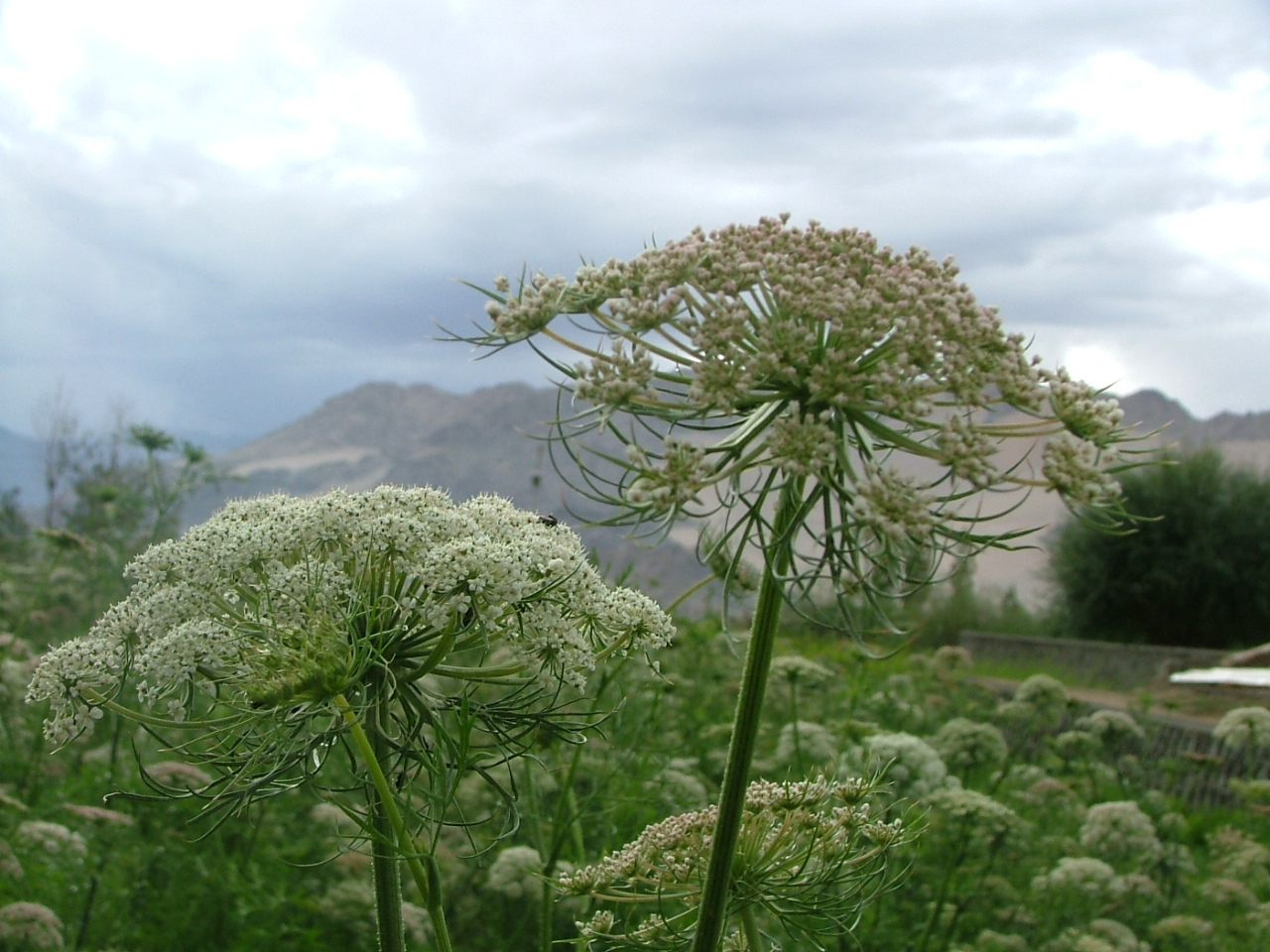
| Morphology: The species is a relatively small, erect, biennial plant with a more or less thick, fleshy, fusiform taproot and a hollow, ridged stem. The herb has a shiny, smooth stem and longitudinally segmented leaves with sheathing leaf bases. During the second year, it’s slender stem bears alternate, pinnate or bipinnate leaves with linear lanceolate lobes (usually less than 1mm wide). The flowers are white (sometimes pink or red), 2-3 mm in diameter and arranged in rather irregular umbels with 5-16 rays. The fruits are yellowish-brown in colour, oblong, slightly curved, ribbed and laterally compressed with narrow, low ridges. |
| Distinguishing features: The plant can be distinguished by its dainty, white flowers, arranged in neat clusters. The most characteristic feature is the typical, well-known smell of the fruit that develops when it is crushed. |
| Life cycle: It generally flowers in the months of August-September. In high altitudes, flowering occurs in the months of June-August, followed by fruiting in the months of August-September. |
| Uses: The herb is generally used in the kitchen as a condiment, although it also forms an essential part of many herbal medicinal preparations. One of its most popular uses is as a carminative for children. Caraway seeds are mainly used by the food industry. Its essential oil is a natural base material in pharmacology and also in the cosmetics industry. The essential oil shows moderate antibacterial and antifungal activities. Decolorized oil from the plant is used as a scent in the soap and perfume industry. It is reported to be abortifacient, anthelmintic and a cardiac stimulant tonic. This plant is a very effective digestive and is used by the people of Chamoli in curing various stomach related problems like loss of appetite and indigestion. It also helps alleviate cough and cold, remit blood-vomiting, piles and worm infestation. The powdered seeds are commonly used as a spice or condiment, which adds flavour to a variety of foods like bread, meat, vegetables, and even alcoholic beverages. The plant is an undisputed drug for the cure of gastric problems of animals and is administered in admixture with buttermilk (takra). |
|
| |
|
|
 |
|
| Family: Umbelliferae/Apiaceae |
| Common/local name: Khonyot (Spiti), Shingu (Lahaul), Gunyun (Ladakh) |
| Trade name: Shia jeera |
|
|
|
| File Size:468.666015625kb |
|
|
|
| |
| |
|
|


