| |
|
|
| Species: Chenopodium botrys |
|
|
| Profile: |
| Chenopodium botrys is a herbaceous plant, belonging to the Chenopodiaceae family. The leaves and seeds of the species are edible and have a characteristic odour. the plant is often found as a weed in agricultural fields but is also cultivated for its medicinal uses. |
| Habitat and ecology: It is found in the western and eastern Himalayas between 2,500-3,500 m. In India the plant is found from Kashmir to Sikkim and in Punjab. The plant is native to the West Indies and South America and has been introduced and naturalized in Central Europe and North America. It is found as a common weed in cultivated fields and wastelands. |
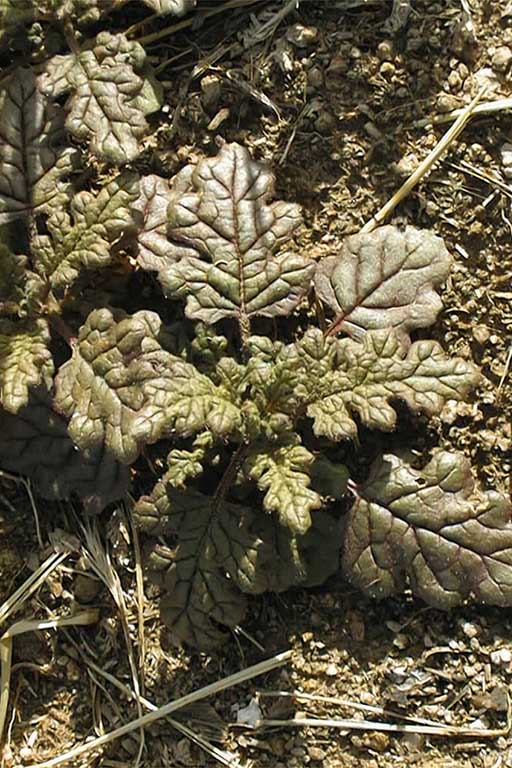
| Morphology: The plant is an erect or ascending branched glandular pubescent herbs. The stems are angular and ribbed. The lower leaves have a petiole, are ovate or oblong, deeply sinuate-toothed or lobed, whereas the upper leaves are oblanceolate and entire. The flowers are green and present in short, axillary cymes or in terminal racemes. The tepals are glandular-pubescent and enclose the fruit. |
| Distinguishing features: Chenopodium botrys is a sticky, strongly aromatic annual herb with an incense-like odour and characteristically lobed, oak-like leaves. |
| Life cycle: Flowering takes place from July to October and the seeds ripen from August to October. |
| Uses: The plant has various ethno-medicinal uses. In Ladakh, the plant is considered to be anthelmintic, diuretic and laxative. Amchis (physicians practicing Tibetan medicine) use it in case of stomach and liver problems. In Kashmir a decoction of the seeds is taken in cases of tapeworm infestation, especially in children. In Lahaul, people add the plant as a flavouring agent to soups containing meat, cheese and barley. It is also used in homeopathy for curing diseases like aphasia, apoplexy, asthma, cerebral deafness, convulsions, dropsy, epilepsy, hemicrania, hemiplegia and leucorrhoea. The essential oil of the plant is being used in soap and perfume industries due to its fragrance, high yield and antimicrobial efficacy. |
|
| |
|
|
 |
|
| Family: Chenopodiaceae |
| Common/local name: Worm seed, Jerusalem oak |
| Trade name: Data not available |
|
|
|
| File Size:931.302734375kb |
|
|
|
| |
| |
|
|


