|
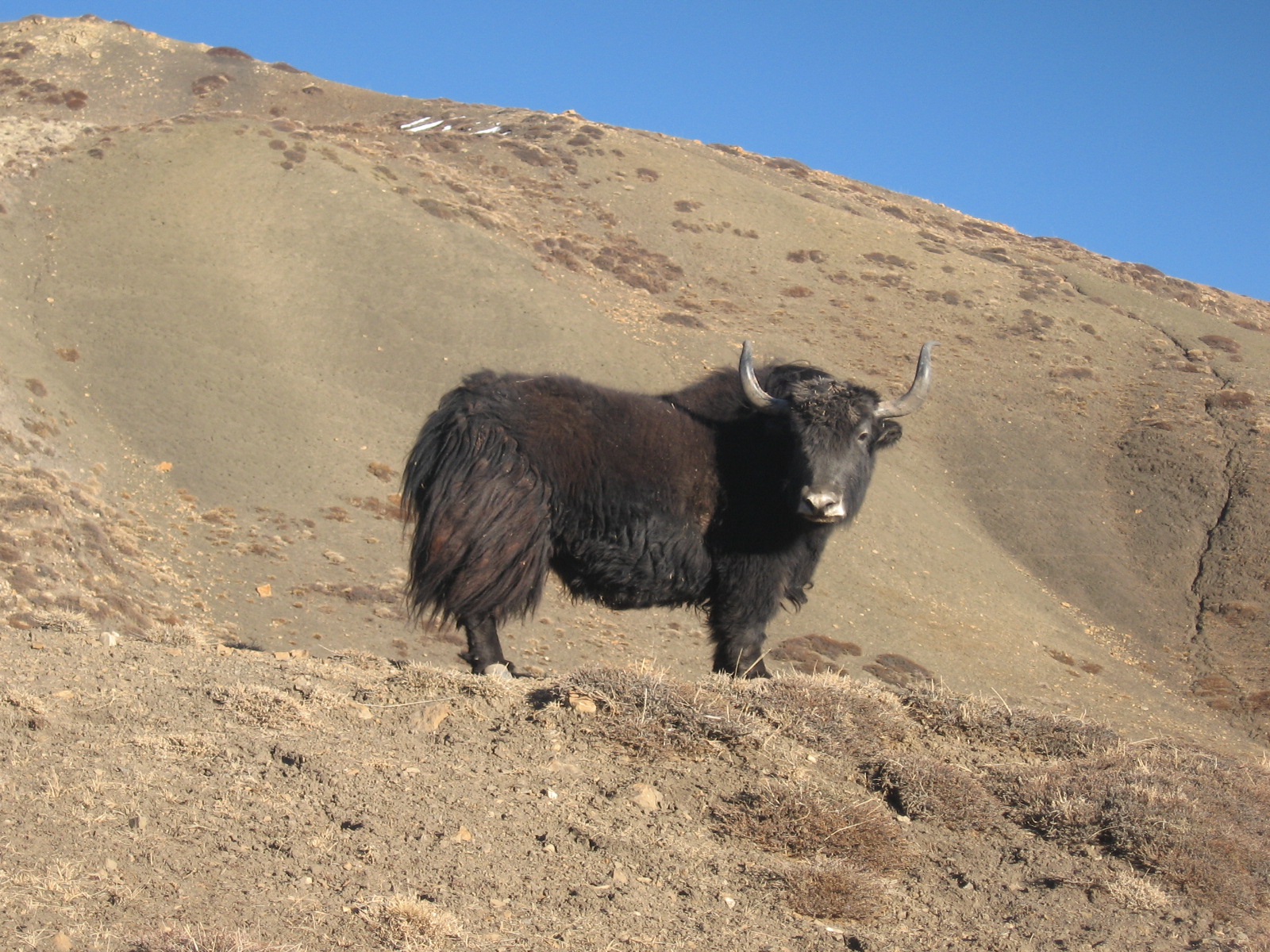
Behaviour: Yaks are gregarious animals, and live in sexually separated herds of 10-40 individuals. They travel large distances in search of food, due to scarce vegetation cover in their habitat. Female yaks and their calves travel in herds. The herd protects the young from predators. In July, there is generally a downward shift from the high plateaus to the lower planes, as mosses and swamp vegetation are at their peaks. In August, the herds shift back to the high plateaus, even retiring in snowy regions to beat the heat. Although yaks are very sensitive to warm temperatures, they can tolerate the cold up to -40ºC. If a herd of yaks is disturbed, they flee for long distances, galloping with their tails erect. If something unexpected appears in their way, they bluff, attacking with a fast charge, but normally stop 10-20 m away from the intruder. In spite of their large build, yaks are excellent climbers. Yaks have a unique characteristic of grunting hoarsely and grinding their teeth. Yaks usually wallow in mud during the rut. This shows that Yaks behave very differently from their relatives, the Gaur and Banteng, and sometimes show buffalo or bison characteristics.
- Diet: Yaks are mainly herbivores that feast on grasses or leaves of low-lying shrubs and herbs. Like cows, they swallow their food whole (without chewing). Later, they regurgitate the food (which is called cud) and chew it. Like other ruminants, yaks have a four-part stomach.
- Reproduction: Mating Season: September-November; Birthing Season: May-June; Birth Rate: 1 every alternate year (in areas of poor grazing, the birth rate may reduce to 1 in 3 years); Gestation period: 258 days; Litter size: 1; Weaning: 1 year; Sexual Maturity: females: 3-4 years.
|