Himalayan VOICES High Himalaya FORUM Himalayan Heritage  
 
Search
 
 
View more Databases:
CULTURAL RESOURCES
Tribes
Socio-economic Fabric
Language & Literature
Art, Crafts & Architecture
 
Species:        Bunium persicum (Boiss.) Fedt.
Plant Profile:

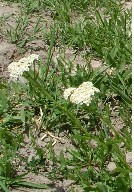
Bunium is an erect, profusely branched herb growing up to a height of 20-70 cm. The leaves are 2-3 pinnatisect with filiform segments. The lower leaves are petiolate while the upper leaves are sessile. The flowers are white in colour and the fruits are oblong, 3-4 cm long, dark brown, ribbed with pointed ends and have a deep aroma. This plant is widely distributed in the temperate region. It is common on gentle exposed mountain slopes and dry scrubby slopes in the northwest Himalayas at an altitude of 2300-3800 m. Flowering and fruiting season is June-September. The plant is domesticated as biennial summer crop in the hills.

Medicinal uses:
Parts used: Fruit and root.
Active principles: It is an aromatic plant with essential oil as the main component. The fruits yield 2-2.6% of essential oil constituting 47-71% carvone. Other constituents are ketone, carvone, terpene, terpinolene and myrecene.
Disease cured and dosage:
  • Ethnomedicinal:  The inhabitants of Lahaul use the seeds for back pain, gastritis and liver problems. Powdered seeds (approximately 2 g per dose) are given thrice a day in Spiti to cure body weakness. The fruits (seeds) are taken internally in neuritis in arms. The powdered fruits and their decoction are regarded as stimulants, carminative and are used for abdominal pain, loss of appetite and for curing fever, diarrhoea and piles.
  • Ethnoveterinary:  The seeds are mixed with curd or mustard oil and given to domestic animals to treat digestive disorders and dysentery.
Ayurveda/Unani prepration: Churna, prescribed dose is 1-3 g.
Ayurvedic properties and actions:
  • Guna (Qualities):  Laghu (light), ruksha (dry)
  • Rasa (taste):  Katu (pungent)
  • Vipaka (post digestive taste):  Katu (pungent)
  • Virya (potency):  Ushna (hot)
Therapeutic description:
  • Effect on humours:  Alleviates vata, kapha.
  • Blood-vascular system:  Cures cardiac debility and anasarca.
  • Respiratory system:  Used to treat bronchitis, dyspnoea, cough and pleuritis.
  • Digestive system:  Used to treat foul smell in the mouth, indigestion, vomiting, dyspepsia, flatulence and irritable bowel syndrome (IBS).
  • Urino-genital system:  Treats uterine and galactogenic disorders.
  • Temperature:  Used in the treatment of chronic fever.
Drug preparation:   To convert the plant into a drug, the mature fruits can be used directly without any processing especially when used as a decoction, cold infusion and hot infusion. Apart from this, the seeds can be dried and ground into a fine or coarse powder.
  •  This is a blackish yellow powder with a characteristic smell.
  •  Traditionally it is kept inside leather bags (muskyal) and stored in a cool place.
  •  The shelf life of the powder is six months to a year.
Family: Apiaceae
Common name: Kala-jirah, Krishnajeerak
Local name: Kala-jirah (Lahaul), Siah-zirah, Kala-zirah (Hindi)
Ayurvedic name: Kala Ajagi
File Size:270.318359375kb
Download