| Plant Profile: |
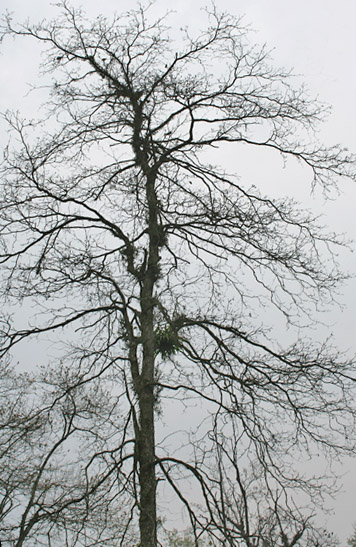
| Terminalia chebula is a large deciduous tree. The leaves are mostly sub opposite, ovate or elliptic and 7.5-15 cm long. The flowers are acuminate, dull white or yellow in colour,borne in terminal, paniculate spikes and are strongly scented. The fruit is an ellipsoid drupe, 2.5-5 cm long, with a rough, grooved surface and a hard nut. Based on fruit size and shape, the species can be divided into seven types. The tree is found in the outer Himalayas, ascending up to 1600 m from Kangra to Bengal and then throughout the central and south India. Flowering occurs in April-June while fruiting in January-March. The tree can be propagated through seeds and is often cultivated up to an elevation of 1250 m in moist regions with clayey or sandy soil. |
| Medicinal uses: |
| Parts used: Dried fruits, immature fruits, mature fruits, mostly the outer skin of the fruit. |
| Active principles: Contains tannin up to 30%, chebulic acid, 3.5%, chebulinic acid 30% and ellagotannic acid. |
Disease cured and dosage:
- Ethnomedicinal: Myrobalans is a safe and effective purgative, astringent and alterative. The plant has dentrifrice, stomachic and tonic properties. It is used in aphthae, ascites, asthma, bile trouble, bleeding, ulcers in the gums, blood pressure, burns and scalds, carious teeth, cough, dysentery, diarrhoea, piles, ulcers, vomiting and worms. It is also used as a cardiac tonic. Ripe fruit is considered a purgative, removing bile and phlegm.
- Ethnoveterinary: Data not sufficient
|
| Ayurveda/Unani prepration: Abhyamodak, abhyarishta, pathyadi vati, pathyadi kwath, chitrak haritaki, agstay haritaki, dantiharitaki, haritaki khand, pathyadi churna, Prescribed dose - churna: 3-6 g. |
Ayurvedic properties and actions:
- Guna (Qualities): Laghu(light),ruksha(dry)
- Rasa (taste): Madhur (sweet), amla (sour), katu (pungent), tikta (bitter), kashaya (astringent)
- Vipaka (post digestive taste): Madhur (sweet)
- Virya (potency): Ushna (hot)
- Prabhava (effect): Tridoshhar (alleviates three humours)
|
Therapeutic description:
- Effect on humours: Alleviates vata, pitta, kapha but it is especially effective for vataj diseases.
- Systemic effects (external): It is used to treat pain and inflammation, conjunctivitis (paste), wounds (cleaning with its decoction) and mouth and throat diseases (gargles).
- Nervous system: It is used in the treatment of nervine debility, sensory debility, dementia, and all vataj disorders like hemiparesis, paraplegia, hysteria and arthritis.
- Respiratory system: It is used to cure catarrh, cough, hoarseness of voice, hiccoughs and dyspnoea.
- Digestive system: It is used to treat dyspepsia (chewing), abdominal colic, digestive upsets, flatulence, constipation (churna), gulma, piles, jaundice, worms-infestation, irritable bowel syndrome (boiled) and liver and spleen disorders.
- Blood vascular system: It is used to cure cardiac debility, gout and other inflammatory disorders.
- Urino-genital system: It is used in the treatment of spermatorrhoea, leucorrhoea, uterine weakness, sysurea, incontinence of urine, renal calculous and diabetes insipidus.
- Skin: It is used in the treatment of leprosy, erysipelas and other skin diseases.
- Temperature: It is used to treat malaria, typhoid and chronic fever.
|
Drug preparation: To convert the plant into a drug, the fruits are washed, dried and crushed into a powder (churna).
- The drug is called Haritaki-churna in Joshimath and Aru-chupa in Leh.
- The drug must be stored in airtight moisture free containers.
- It has a shelf life of 1-2 years.
- The drug can be externally taken as a decoction or applied as a paste. For internal use it can be chewed, ingested or used to gargle with.
|
|
|
 |
|
| Family:
Comberataceae |
| Common name:
Chebulic myrobalan |
| Local name: Bhonga-nagpo (Lahaul), Harr, Harad (Joshimath), Haritaki, Harde, Aru-ra (Ladakh), Harre, Harad (Hindi) |
| Ayurvedic name:
Pathya, Abhya, Mata |
|
|
|
| File Size:498.6328125kb |
|
|




