Himalayan VOICES High Himalaya FORUM Himalayan Heritage  
 
Search
 
 
View more Databases:
CULTURAL RESOURCES
Tribes
Socio-economic Fabric
Language & Literature
Art, Crafts & Architecture
 
Species:        Capparis spinosa Linn.
Plant Profile:

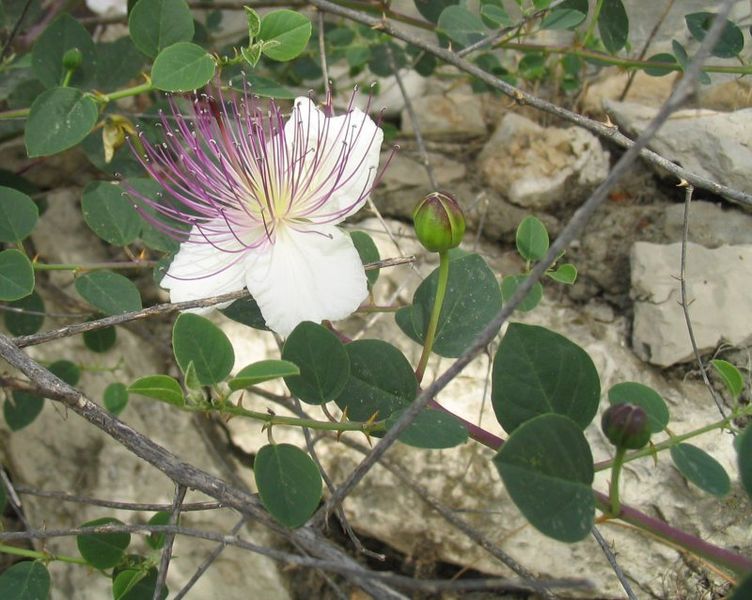
It is a spreading shrubby plant with two ranks of rounded leathery leaves with spiny branches. The whitish to pinkish flowers are large, solitary and axillary with numerous long purplish stamens and a long stalked ovary. The flowers of the plant are borne on first year branches in the axils of younger leaves. The leaves are variable, ovate to elliptic and 1-4 cm long. The fruit is fleshy, oblong-ellipsoid with red flesh and brown seeds. The plant grows throughout Afghanistan to east Nepal at an altitude of 2000-3000 m. It is found on stony slopes and dry valleys. The plants grow well in nutrient poor sharply drained gravelly soils. Mature plants develop large extensive root systems that penetrate deeply into the earth. Flowering occurs in the month of May-June while fruiting occurs in the month of August-September.

Medicinal uses:
Parts used: Fruit pulp, bark, seeds and flower buds.
Active principles: The flower buds contain rutic acid, pectic acid and saponin. They contain 4% pentosans on dry weight basis. The seeds are known to yield 34-36% oil.
Disease cured and dosage:
  • Ethnomedicinal:  In Spiti the powdered bark is administered for urinary problems and in affections of the liver. The plant is said to reduce flatulence and is anti-rheumatic in effect. In Ayurvedic medicine, it is considered a hepatic stimulant and improves liver function. It has reported uses for arteriosclerosis, scurvy, as diuretics, kidney disinfectants, vermifuges and tonics. Infusions and decoctions from the root bark have been traditionally used for dropsy, anemia, arthritis and gout. The plant contains considerable amounts of the anti-oxidant bioflavinoid rutin.
  • Ethnoveterinary:  Data not sufficient
Ayurveda/Unani prepration: 
Therapeutic description:
  • Nervous system:  Used to treat paralysis, hemiplegia, rheumatism and paresis.
  • Respiratory system:  It is used in the treatment of productive cough.
  • Digestive system:  Used to treat liver disorder, digestive upsets, flatulence, worm infestation and scurvy.
  • Urino-genital system:  Treats urine incontinence and urinary tract infection (UTI).
Drug preparation: To convert the plant into a drug, the bark is collected, dried and then ground into a fine powder. The ripe fruits are edible. The drug is taken as a decoction from the powder.
Family: Capparidaceae
Common name: Caper Bush
Local name: Rohtokpa-Martokpa, Kabra (Hindi)
Ayurvedic name: Himsra, Kartotti, Kakadani
File Size:535.6328125kb
Download