| Plant Profile: |
|
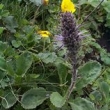
The plant is a trailing herb with the underground stems giving offshoots at joints and rooting in the nodes. The stem of the plant is creeping, leafy and slightly hairy and healthy plants can grow up to a height of 20 cm. The leaves are spatulate to narrow elliptic and dentate.The mature root is covered with small non-green leaves. The flowers are purplish-blue with stamens protruding outwards. The flowering stems are usually longer than leaves. The roots are greyish or dark brown in colour with a rough texture and small scars. The drug in commerce/local use from this plant is in the form of small pieces of rootstock (3-5 cm in length and 0.5- 1 cm in diameter). The herb is found in the alpine Himalayas from Kashmir to Sikkim at altitudes of 3000-5000 m. It grows well on open exposed slopes above the tree line with enough sunlight to facilitate horizontal spread of the rhizomes. The reproductive cycle of this plant is from June-September and the seeds shed in September.
|
| Medicinal uses: |
| Parts used: Dried rhizomes, roots and stolons |
| Active principles: The drug is found to contain irridoid bitter substances like picroside 1, picroside 11 and kutkoside. The root contains a glucosidic bitter principle kutkin (93.4%), a non- bitter product kurrin (0.5%), vanillic acid (0.1%), kutkiol occurring as acetate (0.06%) and kutkisterol (0.18%). |
Disease cured and dosage:
- Ethnomedicinal: Picrorhiza is used as a bitter tonic, antiperiodic, febrifuge, stomachic, antihelmenthetic and appetizer. It is anti-hypertensive and useful in treating asthma, cough, cold, jaundice and leprosy. It is laxative in large doses. An alcoholic extract of the root is found to have antibacterial effects. The drug is found useful in the treatment of jaundice.
- Ethnoveterinary: It is used for treat cattle whey they stop grazing due to stomach problems.
|
| Ayurveda/Unani prepration: Aarogya-vardhini, katukadh-loh, tiktadi-kwath. Prescribed dose: churna 1/2-1 g (as a tonic), 3-6 g (as a purgative), kwath 25-50 ml. |
Ayurvedic properties and actions:
- Guna (Qualities): Ruksha (dry), laghu (light)
- Rasa (taste): Tikta (bitter)
- Vipaka (post digestive taste): Katu (pungent)
- Virya (potency): Sheet (cold)
As per Charaka Samhita it is considered as bhedaniya (cathertic), lekhaniya (reduces corpulency), tiktaskandh (bitter taste) and stanyashodhan (galacto-purifiers).
|
Therapeutic description:
- Effect on humours: Alleviates pitta, kapha
- Blood Vascular system: Treats cardiac diseases and other inflammatory disorders.
- Respiratory system: Cures cough and dyspnoea.
- Digestive system: It is used in the treatment of dyspepsia, digestive upsets, liver disorders, jaundice, constipation, flatulence and abdominal diseases (given as a purgative). It is also very effective as a hepatoprotectant.
- Urino-genital system: It acts as a galactopurifier.
- Skin: It is used to treat leprosy and other skin diseases.
- Temperature: Treats malaria, typhoid and chronic fever.
|
Drug preparation: To convert the plant into a drug, the rhizomes, stolons and roots are cut into small pieces and freed from the root. Then they are dried under shade and used whole or powdered.
- The drug should be kept in moisture free airtight containers.
- It is a blackish brown bitter tasting powder.
- The whole drug has a shelf life for 1 year and powder for 6 months.
|
|
|
 |
|
| Family:
Scrophulariaceae |
| Common name:
Kutki, Indian gentian |
| Local name: Karru (Lahaul), Karru (Kinnaur), Kadwai (Joshimath), Hong-Lhen, Mugpo, Kutki Khongling (Tawang), Haung lieun (Spiti/Tibet), Kutki (Hindi) |
| Ayurvedic name:
Katuka, Tikta, Katurohini, Matsyashakla, Chakrangi, Shatparva |
|
|
|
| File Size:243.62109375kb |
|
|




