| Plant Profile: |
|
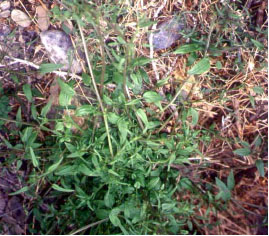
The plant is a perennial, herbaceous prickly climbing plant, with very long cylindrical, flexuous roots with a thin red bark. The stems are long, rough and grooved. The bark is white, branches scandent by means of numerous deflexed branchless with petioles. The leaves are in whorls of four and cordate-ovate to ovate-lanceolate. The flowers are borne in terminal panicled glabrous cymes. The fruits are globose, smooth, purplish black in colour when ripe and sweet to taste with two small seeds. It is a climbing herb growing in the North-West Himalayas, Nilgiris and other hilly districts of India.
|
| Medicinal uses: |
| Parts used: Roots |
| Active principles: The roots contain resinous and extractive matter, gum, sugar and a red crystalline principle called purpurine. Yellow glucosides like manjistin and xanthine are also present, besides garancin and orange-red alizarin. Anthro-quinones, penta-cyclic triterpenes, quinines, cyclic hexapeptides and diethylesters are also reported. The root also contains small amounts of purpuroxanthin and pseudopurpurin. |
Disease cured and dosage:
- Ethnomedicinal: The traditional therapeutic use of the plant has been in skin disorders. It is found effective in scabies and various fungal infections. It is also used as an anti-inflammatory agent in the treatment of ulcers and sores. It is used in the form of poultice for dermatological disorders and as a decoction. The plant is used in rheumatism, pleurisy and other chest complaints. The root is used as an astringent, tonic and blood purifier and is given in urinary troubles. The roots are useful in eyesores, liver complaints, spleen enlargements and are also used internally to treat menorrhagia and other menstrual complaints. The root decoction and paste is employed in ulcerated skin as it is having antibacterial property particularly against Staphylococcus aureus. Crushed roots are applied for poisonous stings of insects and caterpillars. A decoction of the leaves and stems is used as vermifuge.
- Ethnoveterinary: Data not sufficient
|
| Ayurveda/Unani prepration: Manjishthadi-kwath, Manjisthadi-arka, Prescribed dose: kwath 50-100 ml, churna 1-3 g. |
Ayurvedic properties and actions:
- Guna (Qualities): Guru (heavy), ruksha (dry)
- Rasa (taste): Madhur (sweet), tikta (bitter), kashaya (astringent)
- Vipaka (post digestive taste): katu (pungent)
- Virya (potency): Ushna (hot)
As per Charaka Samhita it is considered as varnya (complexion promoters), vishaghna (reducs toxicity) and jwarhar (antipyretic).
|
Therapeutic description:
- Effect on humours: Alleviates pitta, kapha
- Systemic effects: Treats wounds, inflammation and skin diseases.
- Nervous system: It is used to cure psychiatric problems.
- Respiratory system: Cures cough and hoarseness of voice.
- Digestive system: It is used to treat dyspepsia (chewing), digestive upsets, worms-infestation, diarrhea and dysentery.
- Blood vascular system: Treats blood related disorders.
- Urino-genital system: It is used in the treatment of diabetes insipidus, amenorrhea, dysmenorrhea and acts as a galactopurifier.
- Skin: Treats leprosy, erysipelas and other skin diseases and acts as a complexion promoter.
- Temperature: Cures puerperal fever and chronic fever.
|
Drug preparation: To convert the plant into a drug, the roots are cut into small pieces, peeled and then dried. Then they are processed in various ways to prepare medicines for different purposes.
- The drug is brownish red in colour and must be stored in an airy, cool and dry place.
- The shelf life is 1-2 years.
- It can be used externally as a poultice or paste.
|
|
|
 |
|
| Family:
Rubiaceae |
| Common name:
Manjistha, Indian madder |
| Local name: Manjit, Manjith, Manjisth (Joshimath), Manjith (Hindi) |
| Ayurvedic name:
Manjishtha, Viksa, Yojanvalli |
|
|
|
| File Size:360.634765625kb |
|
|




